If you're towing a boat toward Lake Mead this week, the honest question isn't whether a ramp is "open." It's whether it's usable for your specific rig. Hemenway Harbor remains the primary launch point for most Las Vegas-area boaters, but it runs on a limited-lane mat system that can slow down or shut off access with little warning.
Lake Mead National Recreation Area has spent the past several years adjusting to falling water levels, and that shows up directly at the ramps. Some legacy launch sites around Boulder Basin closed years ago and haven't reopened. Others, like Echo Bay, have been under active construction to extend concrete down toward the water's edge.
None of this is static. Elevation moves week to week, construction schedules shift, and a ramp that had two lanes open last weekend might be down to one today. Before you hitch up the trailer, it's worth checking Lake Mead water level readings and verified Lake Mead boat ramps on LakeWatchers, since that single check can save a wasted drive out to the lake.
Which Lake Mead Ramps Are Open Today?
Hemenway Harbor is the main functioning launch point on the Nevada side, but "open" comes with real limits. Callville Bay and Echo Bay offer portable mat access with their own quirks, Temple Bar and South Cove serve the Arizona side, and several older sites remain closed outright.
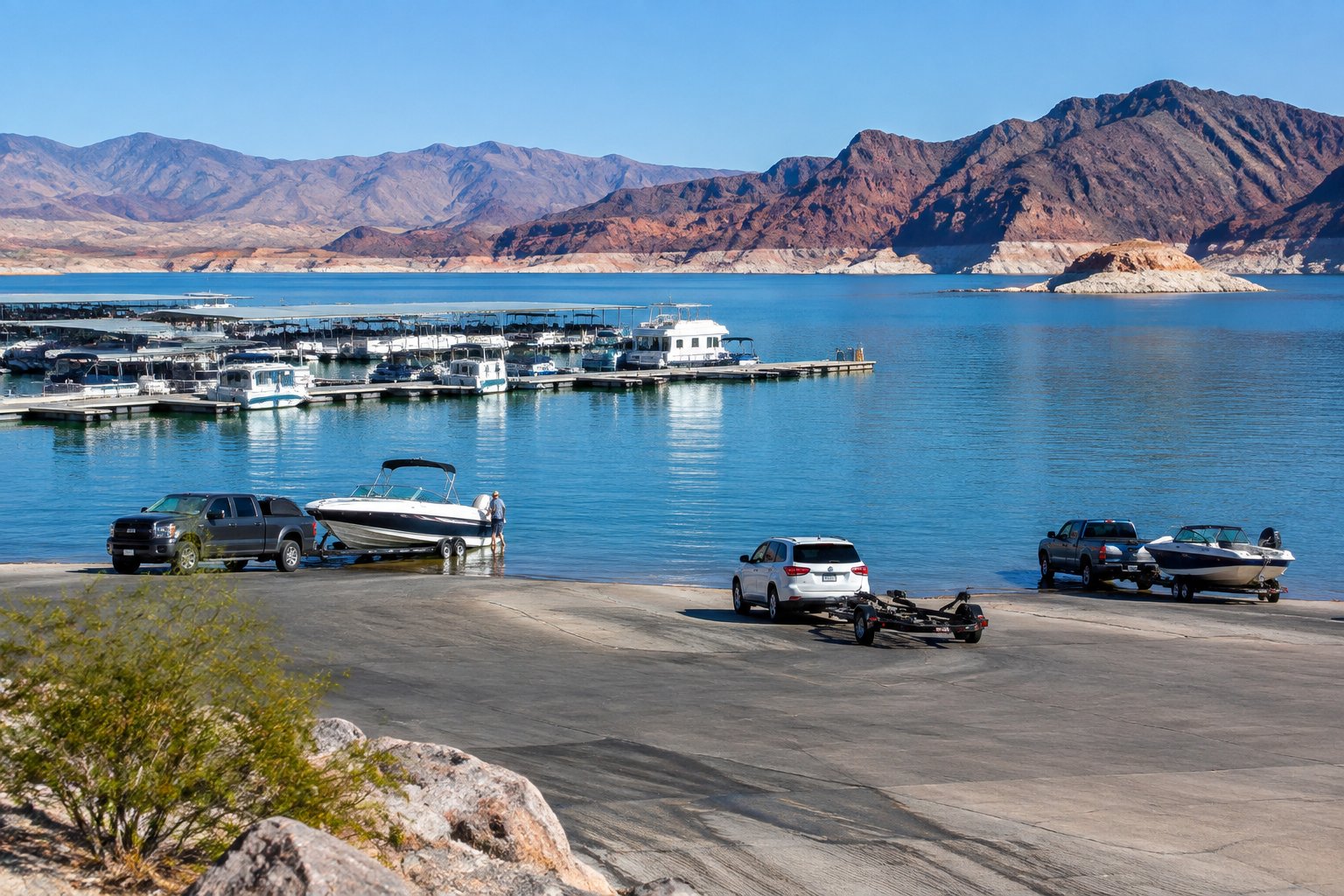
Hemenway Harbor Access and Current Lane Conditions
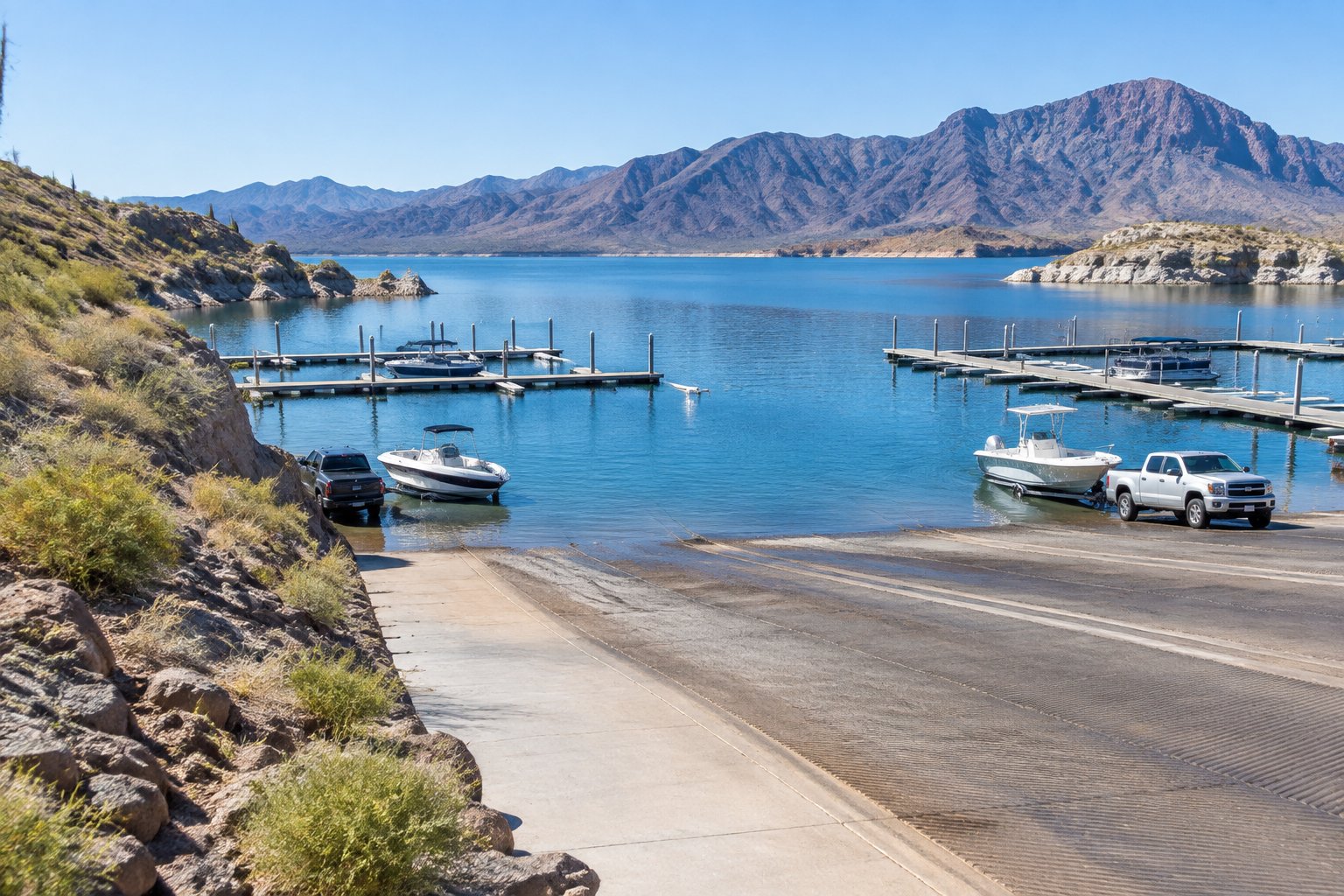
Hemenway Harbor Launch Ramp is the busiest and most reliable launch site near Las Vegas, but it typically runs on a single active lane laid over pipe mats rather than a full-width paved surface. That narrow setup means retrieval during busy hours can back up fast, especially on weekends and holidays.
The National Park Service has worked on extending this ramp to keep it usable as elevation drops, with construction phases that can temporarily affect lane availability. Expect crews, cones, or partial lane closures at various points through the year.
Because Hemenway carries so much of the lake's launch traffic, arriving early is the most reliable way to avoid a long line. A late-morning arrival on a summer Saturday can mean a wait measured in hours, not minutes.
Callville Bay and Its Mobi Mat Launch
Callville Bay uses a Mobi Mat, a rollable portable ramp surface, to get trailers down to the water where the natural grade no longer reaches the shoreline. This works for many smaller trailered boats, but it isn't a paved ramp, and the surface can feel different underfoot and under tires than a standard concrete grade.
Vessel operators towing heavier boats should confirm current mat length and water depth before committing to a launch attempt here.
Echo Bay Construction and Portable-Mat Access
Echo Bay's launch ramp has been under construction to extend concrete down toward lower elevations, with work expected to continue through the fall and into winter. The site has stayed open during this process, often using portable mat sections to bridge the gap between the paved ramp and the water.
Expect equipment, staging areas, and possible short delays near the ramp itself. Confirm current access before towing out, since construction phasing can change which section of the ramp is usable on a given day.
Temple Bar and South Cove Options
Temple Bar, on the Arizona side, gives boaters an alternative to the Nevada-side crowds and connects to Temple Bar Marina for fuel and services. South Cove sits further along the Arizona shoreline and serves as another access point, though it can involve a longer drive from Las Vegas.
Both sites are worth checking directly before a trip, since ramp grade and usable lane width can shift with elevation just as they do on the Nevada side.
Closed or Unavailable Sites: Boulder Harbor, Government Wash, Las Vegas Bay, and Overton Beach
Boulder Harbor, Las Vegas Bay, and Overton Beach launch ramps have been closed to boat launching for an extended period due to receding water levels leaving them too far from the shoreline. Government Wash reopened as a recreation area after a lengthy restoration project, but that reopening applied to shoreline access rather than restoring a boat launch ramp.
Treat these sites as day-use or shoreline locations, not launch options, unless official NPS channels state otherwise.
How to Choose the Right Launch Site for Your Boat
The right ramp depends on your boat's size, your trailer's ground clearance, and whether you need marina services once you're on the water. A 16-foot fishing boat and a 30-foot cruiser face different constraints at the same launch site.
Motorized Boats, Trailer Length, and Ramp Grade
Longer trailers need more room to maneuver and a gentler ramp grade to avoid scraping a hitch or bumper. Hemenway Harbor's mat system accommodates a wide range of motorized boats, but a steep or narrow grade can make backing down harder for less experienced trailer operators.
Check current ramp grade and lane width before towing a larger boat to any site, since low elevation can steepen the effective grade compared to years with higher water.
Personal Watercraft, Kayaks, and Non-Motorized Launching
Personal watercraft and paddlecraft have more flexibility than trailered boats, since a Mobi Mat or narrow lane that frustrates a large trailer often works fine for these smaller craft. Kayaks and canoes can sometimes launch from shoreline areas that aren't formal ramps at all.
Confirm that a shoreline spot allows launching before using it, since some areas near closed ramps remain restricted.
Marina Services, Fuel, Courtesy Docks, and Overnight Berths
Las Vegas Boat Harbor and Temple Bar Marina offer courtesy docks, fuel, and boat rentals, and slip renters can contact the marina directly with questions about service changes tied to ramp construction. A courtesy dock next to your launch lane makes loading gear and passengers much easier than launching without one.
If you need fuel or an overnight berth, confirm availability with the marina directly rather than assuming it based on ramp status alone.
Fishing Access and the Best Side of the Lake for Your Trip
Anglers often favor the Arizona-side ramps near Temple Bar and South Cove for access to different fishing grounds than the Nevada side offers near Hemenway and Callville Bay. For localized species tactics, check our Lake Mead fishing guide before setting out. Lake Mohave, reached further downstream, is another option worth considering if Lake Mead access feels congested on a given weekend.
Pick your launch site based on where you plan to fish, not just which ramp is closest to Las Vegas.
Why Ramp Access Changes So Quickly
Ramp access shifts because Lake Mead's water level moves with drought conditions, Bureau of Reclamation operations, and seasonal demand on the Colorado River system. A ramp built for one elevation can end up stranded above the waterline within a few years.
Lake Elevation, Changing Shorelines, and Low Water Levels
Lake Mead's elevation determines how far the shoreline sits from any fixed ramp structure. Falling water has kept several older ramps unusable while newer extensions and portable mats fill the gap at active sites. For a deeper look at similar low-water launch challenges upstream, see our Lake Powell boat ramps guide.
Each foot of elevation change can shift the shoreline by dozens of feet horizontally on a shallow-grade ramp.
Drought Conditions, Climate Change, and Bureau of Reclamation Operations
Sustained drought across the Colorado River basin has reduced inflow to Lake Mead over multiple years, and Bureau of Reclamation release decisions affect how much water reaches the lake in a given season. These are long-term hydrological and management factors, not something a single wet winter reverses on its own.
The National Park Service regularly advises visitors of ongoing changes to water access points tied to reservoir management.
The Sustainable Low Water Access Plan and Ramp Extensions
The National Park Service has been developing a Sustainable Low Water Access Plan aimed at keeping key launch points usable even if the lake fluctuates. Public comment periods have shaped this planning process, and ramp extension projects at Hemenway Harbor and Echo Bay reflect that broader strategy.
These projects extend physical ramp surfaces further toward the lake's center rather than relying on temporary mats indefinitely.
Construction, Weather, Congestion, and Temporary Restrictions
Active construction, high wind events, and holiday-weekend congestion can all restrict ramp access on short notice, separate from any long-term elevation trend. A ramp can be fully built and still closed for an afternoon because of equipment staging or a safety concern.
Confirm same-day status before towing out, since posted long-term ramp conditions don't account for short-term restrictions.
Check Conditions Before You Tow to the Lake
Confirm both the lake's current elevation and the specific ramp's status the same day you plan to launch, since either one can change faster than most people expect. A ramp status from last week is not a reliable guide for this weekend.
Where to Find Live Elevation and Official Ramp Updates
LakeWatchers tracks live Lake Mead elevation readings alongside current ramp statuses, giving boaters a single place to check both numbers before leaving home. Pairing the elevation reading with a ramp's published minimum operating elevation gives a clearer picture than checking either figure alone.
What to Confirm With the National Park Service and Marina Operators
The National Park Service posts alerts on closures, construction schedules, and launch ramp conditions for Lake Mead National Recreation Area. Marina operators at Las Vegas Boat Harbor and Temple Bar Marina can confirm dock, fuel, and slip conditions tied to their specific location.
Calling ahead matters most before a holiday weekend trip or any visit involving a larger boat.
How to Plan for Wait Times, Parking, and Launch-Ramp Closures
Arrive early, especially at Hemenway Harbor, since limited lanes mean wait times stretch fast once traffic builds. Parking near popular ramps fills quickly on weekends, and a full lot can add as much delay as the ramp line itself.
Build in extra time for retrieval too, since narrow mat lanes slow down boats coming off the water just as much as boats going in.
A Safer, Smoother Lake Mead Launch
A safe Lake Mead launch starts with a life jacket for every person on board and a clear plan for backing down a narrow or steep lane without blocking other boaters. Portable mat surfaces can feel slick when wet, so slow, deliberate trailer movements matter more here than on a standard concrete ramp.
Check the ramp grade before backing down if you haven't launched at that site recently. Steep transitions near the waterline have caught boaters off guard when elevation has dropped since their last visit.
Stay out of posted restricted areas near closed sites like Boulder Harbor or Las Vegas Bay, even if the shoreline looks approachable from a distance. These closures typically reflect real hazards, not just administrative caution.
Keep an eye on other vessel operators in the launch lane, since congestion at a single-lane ramp raises the chance of a mishandled trailer or a stalled boat blocking the mat. A calm, patient approach at the ramp keeps the line moving for everyone behind you.
Frequently Asked Questions
What is the Lake Mead boat launch status today?
Hemenway Harbor remains the primary operating launch ramp, typically running on a limited lane pipe mat system, with Callville Bay, Echo Bay, Temple Bar, and South Cove offering additional access. Status can change daily, so confirm current conditions through LakeWatchers or the National Park Service before towing out.
Is Hemenway Harbor open for boat launching?
Hemenway Harbor Launch Ramp is open, but access usually runs through a single active lane on pipe mats rather than a full paved surface. Construction related to the ramp's extension project can affect lane availability at various points during the year.
Can I launch a personal watercraft at Lake Mead?
Personal watercraft can launch at Lake Mead through the same active ramps used by trailered boats, including Hemenway Harbor and Callville Bay. Smaller craft often have more flexibility with narrow mats and portable ramp surfaces than larger trailered boats do.
Which Lake Mead ramps use a Mobi Mat or portable ramp?
Callville Bay uses a Mobi Mat system, and Echo Bay has relied on portable mat sections during its ongoing ramp extension construction. These surfaces differ from paved concrete ramps and can affect how a boat trailer handles during launch and retrieval.
How do low water levels affect Lake Mead boat ramps?
Falling elevation moves the shoreline away from fixed ramp structures, which has closed sites like Boulder Harbor, Las Vegas Bay, and Overton Beach. Active ramps have responded with extensions and portable mats to keep pace with the lake's changing level.
Where can I check live Lake Mead water levels before towing?
LakeWatchers provides current elevation readings alongside ramp-by-ramp status updates, giving boaters one place to check both figures before leaving home. Pairing that with National Park Service alerts on construction or closures gives the most complete same-day picture.